
WTTA for hiring companies: what changes in 2027 and 2028?

Do you hire workers through an agency or secondment company? The WTTA also affects your organisation. Start with three questions: who supplies the workers, who directs their work and where do you record checks?
What does the WTTA regulate?
The Dutch Wet toelating terbeschikkingstelling van arbeidskrachten introduces an admission system for the labour supply market. Suppliers and businesses using their workers have different roles. Distinguish them before adopting a list of measures: a supplier admission application is different from a hiring company preparing its records.
What role does my business have?
Consider the actual arrangement: another business supplies workers for payment and they work under your supervision and direction. A contract label alone does not settle the assessment. Keep unclear cases visible. Under genuine contracting arrangements, supervision remains with the workers’ own employer. Use the official decision guidance for your situation.
Why are there different dates?
Implementation is phased. Reporting and record-keeping duties are among the provisions starting on 1 January 2027. The prohibition on hiring or supplying workers without required admission follows on 1 January 2028. Waiting for enforcement leaves little time to organise workable records. Consult the commencement decision for the legal detail.
What will the public register change?
The public supplier register is expected from 1 July 2027. It will show admission, exemptions and transitional situations. Plan how your team will perform and retain checks once it is available. A checkbox in your own supplier system is not independent confirmation of official status.
What is a practical first step?
Create one overview of the businesses supplying your workers. Give each record an internal owner and choose a place for contracts and check evidence. Agree with procurement, HR and planning who may start an assignment and who acts when questions arise. This is an organisational starting point, not a complete legal checklist.
How can InleenDossier help?
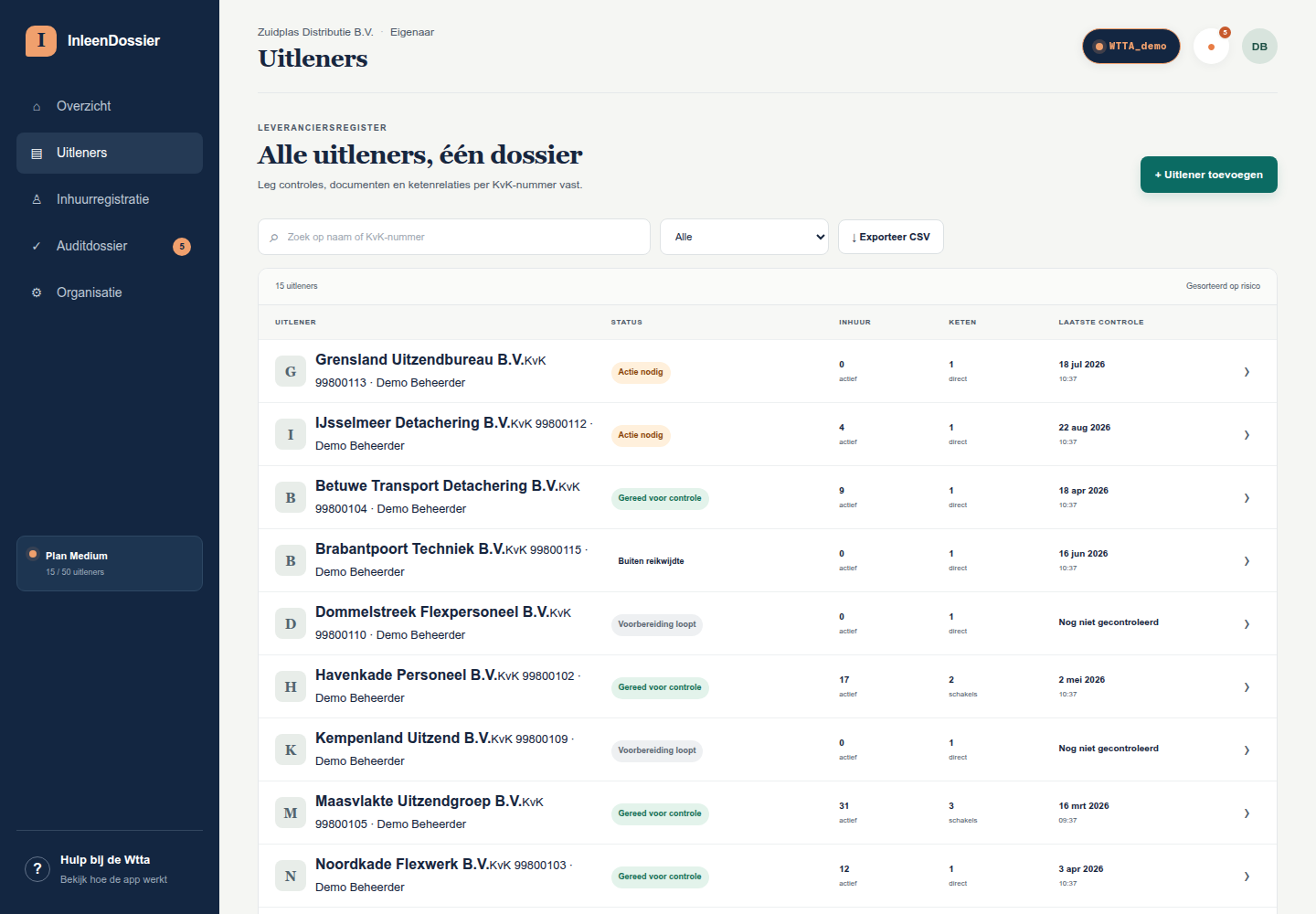
InleenDossier links suppliers to checks, documents and hiring records. It displays manually recorded checks and supports a transferable evidence dossier. It does not replace your assessment or check the NAU register automatically. A demonstration with fictional data shows how this workflow could fit your organisation.
The short version
Start with suppliers and responsibilities. Then define who checks, where evidence is kept and how exceptions are followed up.